One to Watch
 Artist Michel Katz’ Post-Analogue Paradise
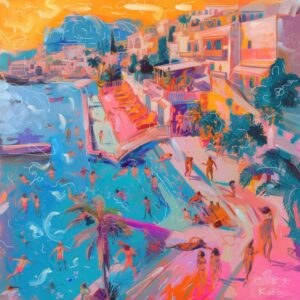
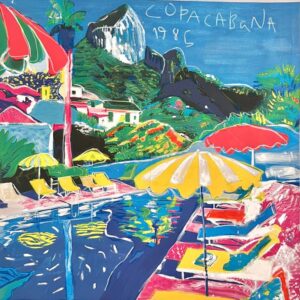
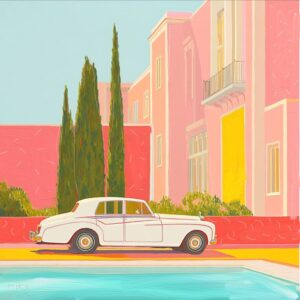
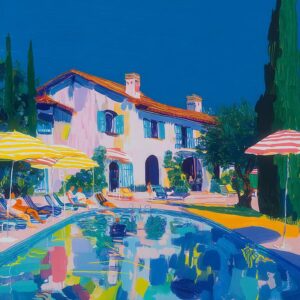
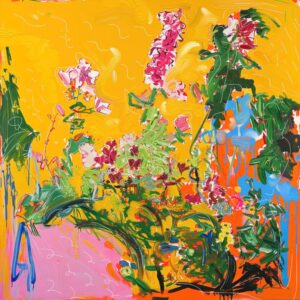
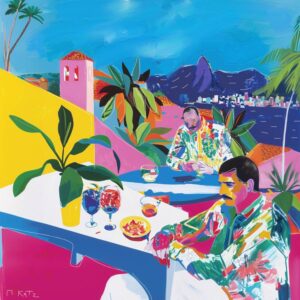
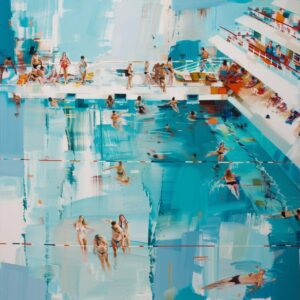
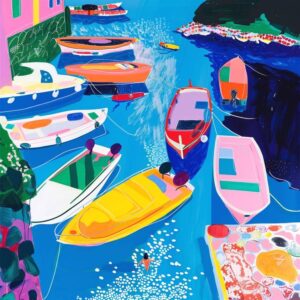
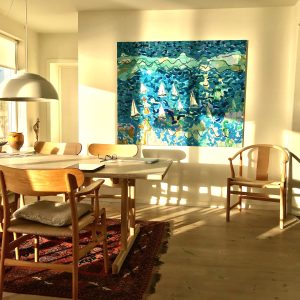
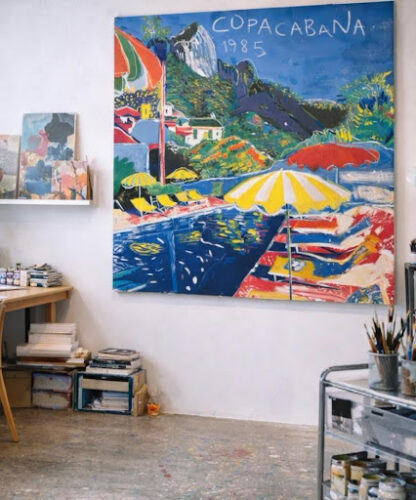
Brazilian artist Michel Katz creates sun-soaked escapism in each of his depictions of paradise. Saturated with color, his work exudes the calm, delectably inviting energy of a slower life. In the world Michel creates, every day is filled with joy and warmth. Michel has exhibited his work at various shows locally in Brazil, and his artwork has been featured numerous times by Saatchi Art curators. Discover the seaside oases of this month’s One to Watch.
Tell us about who you are and what you do. What’s your background?
I’m a contemporary artist working between digital creation and physical painting. My practice is rooted in post-analog art: I often start digitally, then translate the image into the physical world using acrylic paint, oil sticks, and crayon on canvas. My background is strongly influenced by advertising and visual culture, which taught me how to communicate fast, emotionally, and with clarity. I’m interested in luxury, leisure, memory, and the mythology of wealth—especially moments of pause, like vacations, pools, and seaside rituals.
What’s your studio like, and how does your environment influence your work?
My studio is part atelier, part laboratory. Screens coexist with canvases, paint stains, and unfinished ideas. I move constantly between digital tools and physical materials, which creates friction—and that tension feeds the work. The studio becomes a site of translation, where images lose their perfection and gain presence, weight, and imperfection.
Who are your biggest influences and why?
I’m influenced by artists who redefined how we see images: David Hockney for his engagement with technology and space, Peter Max for his color and optimism, and Gerhard Richter for his tension between photography and paint.
Do you plan your paintings in advance or let them evolve organically?
The work begins digitally with clear structure and intention. But once it enters the physical realm, control dissolves. Paint, texture, and time introduce unpredictability. The final image emerges through negotiation between system and instinct.
How do you know when a piece is finished?
When the digital origin disappears. The work is finished when it no longer feels like an image and fully becomes an object—something tactile, layered, and resistant to easy reading.
How do you hope viewers respond to your works? What do you want them to feel?
I want viewers to feel attraction first—and discomfort right after. The work should seduce, then question why it seduced them. Ideally, the painting lingers in their mind as an image that feels luxurious, strange, and slightly unsettling.
How do you see your work evolving in the next few years?
I see the work expanding in scale and physicality, while becoming conceptually sharper. Fewer images, stronger presence. More emphasis on surface, texture, and the collapse between digital illusion and material truth.
If you could collaborate with any artist, living or dead, who would it be?
David Hockney. His continuous dialogue with technology and perception aligns naturally with Post-Analogue thinking.
If your art could be displayed anywhere in the world, where would it be?
I would like my work to exist in spaces where power, desire, and image converge—not only museums, but places tied to wealth and legacy. A private collection overlooking the Mediterranean, a modernist house in Los Angeles, or a contemporary museum where digital culture is part of the narrative. My work gains meaning when it lives inside the systems it questions.
Meet more artists like painter Michel Katz. Discover a new talent or hear from your favorites in our monthly One to Watch interview.