Art History 101
10 Fast Facts About Henri Matisse
Although his expressive, colorful style is beloved worldwide, many still remain unfamiliar with the avant-garde painter Henri Matisse. Here are ten facts about Henri Matisse to acquaint you with his life and work.
Henri Matisse first began painting to pass the time while recovering from appendicitis.
Matisse had previously studied law, but decided to pursue a career in the arts after falling in love with painting on a whim while in poor health.
Matisse began his career with a traditional approach
Having studied under Academy favorite William-Adolphe Bouguereau, Matisse’s early work seems almost unrecognizable when compared with his work created years later. While skillfully rendered, these more muted works did little to attract attention.
It was a summer in the French Mediterranean that inspired Fauvism
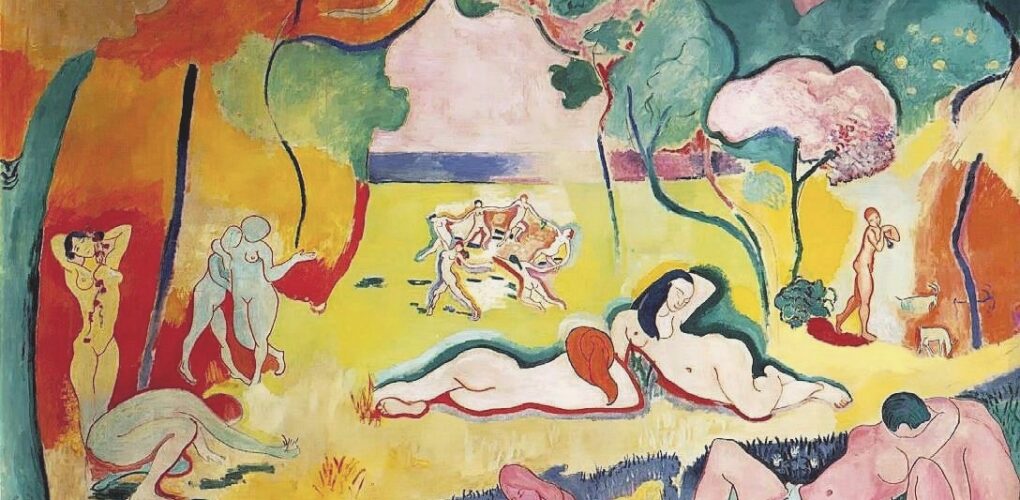
Summer visits to St. Tropez in 1904 and Collioure in 1905 progressively inspired Matisse to adopt a more expressive style. The latter trip in 1905 was with André Derain, the cofounder of Fauvism.
Fauvism got its name from the review of an unimpressed art critic.
Matisse was the cofounder of the art movement Fauvism, known for bold color and fluid representation of natural forms. The review referred to Matisse and his contemporaries as ‘fauves’ or wild beasts, admonishing their brazen palette and carefree style. The name stuck, and so Fauvism was born.
Matisse made extensive use of complementary colors
Matisse was not afraid to experiment with his color palette. By using bright and starkly different, complementary colors, Matisse achieved visual harmony while also grabbing viewer’s attention.
He previously experimented with the various Post & Neo-Impressionist styles
Before pioneering Fuavism, Matisse experimented with a wide breadth of styles. This included artwork clearly inspired by the Pointilist style of Neo-Impressionist artists like Paul Signac.
His most famous work, La Danse, was actually a commission for a Russian art collector
La Danse, now universally known as a symbol of Modern art, was actually commissioned by Sergei Shchukin whom Matisse knew well for years. The piece now hangs in the Hermitage Museum in Saint Petersburg, Russia.
Visits to Morocco in 1912 and 1913 inspired his groundbreaking art
Matisse harbored a fascination for Islamic art, and found a great deal of inspiration from these trips. Works like The Moroccans demonstrate a style departed from Fauvism and altogether entrenched in the Modern visual system of artist like Pablo Picasso.
Matisse turned to his iconic paper collages because of failing health
Towards the end of his life, Matisse started using a wheelchair due to his failing health. The constraints this placed on his painting led him to experiment with paper cut-outs. Now, works such as Blue Nude II are among his most recognizable, and their impact on the course of art history cannot be denied.
Matisse was only 12 years older than Picasso
Though he is often associated with Impressionist painters, Matisse’s work was more Modern than anything. He played a key role in the advent of a new visual language in the early 20th century. By the time of his death in 1954, the landscape of the art world had completely shifted.