Art History 101
Claude Monet and the Birth of Impressionism
Claude Monet’s name has become synonymous with the pastel colors and gentle brushstrokes of Impressionism. A founder of one of art history’s most beloved movements, discover Monet’s story below.
Who was Monet?
Born in Paris in 1840 and raised in Normandy, Monet showed early artistic promise. His formal training began under artists such as Eugène Boudin, who introduced him to plein-air (outdoor) painting, a practice that would define his life’s work. Monet later studied in Paris, where he met a circle of young artists who would become the founders of the Impressionist movement. Monet’s personal life was marked by both devotion and difficulty. He married Camille Doncieux in 1870, though the couple struggled financially for years. After Camille’s death, Monet eventually settled with Alice Hoschedé and their blended family. Despite periods of poverty and grief, those who knew him described an artist fiercely committed to his craft, often painting the same subject dozens of times to capture shifting light, seasons, and atmosphere.
Where did Monet live and work?
It was in Giverny that Monet found what would become his lifelong sanctuary. Moving there in 1883, he cultivated his now-famous gardens, carefully designing the lily pond, the Japanese bridge, and the lush greenery that all became subjects of his most iconic works. Giverny provided not only a peaceful retreat from the pressures of Parisian life but also an ever-renewing source of creative inspiration. Monet treated the gardens as a living canvas, shaping them with the same sensitivity he brought to paint. The result was a place where life and art blended seamlessly, each enhancing the other.
What led Monet to help create Impressionism?
Monet’s role in founding Impressionism cannot be overstated. He and his contemporaries were perpetually frustrated with the Salon and its stringent selectivity. Typical of the style preferred by the French Academy were painters like William-Adolphe Bouguereau, whose naturalist technique and unwavering portrayal of religious and mythological scenes contrasted heavily with the more experimental work of artists like Monet. When Monet and his contemporaries first exhibited works like Impression, Sunrise, they presented a revolutionary break from traditional academic painting.
Why did Monet paint the same subjects repeatedly?
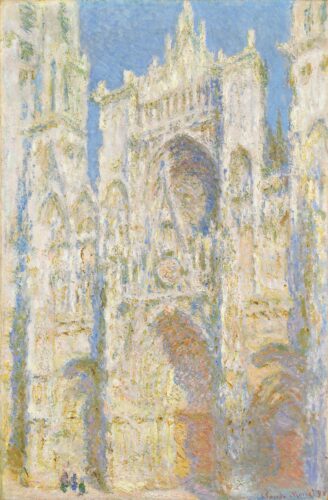
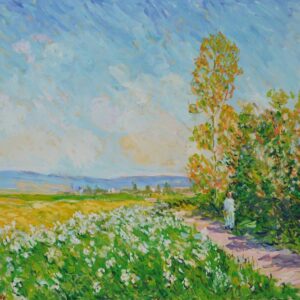
Rather than striving for precise representation, Impressionists embraced perception, momentary sensation, and the play of light and color. Their method was often experimental—a form of trial and error in which quick, visible brushstrokes captured fleeting effects of weather, time of day, or atmosphere. Monet painted mostly outdoors, a relatively new method for the time. Painting outdoors enabled Monet to fine-tune his awareness of small changes in his immediate environment. As a result, his work captures a sensorial truth. Although he didn’t aim to depict nature exactly, his work conveys a distinctly human vision of the world – one that is more based on feeling than seeing. His willingness to prioritize impression over exactness opened the door for improvisation and abstraction, untethering the visual language of fine art from both the icons of religion and strict recreations of life.
What are Monet’s most famous paintings?
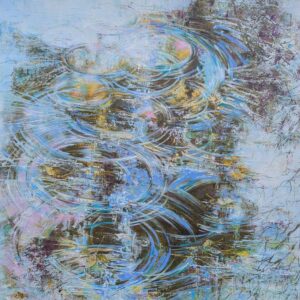
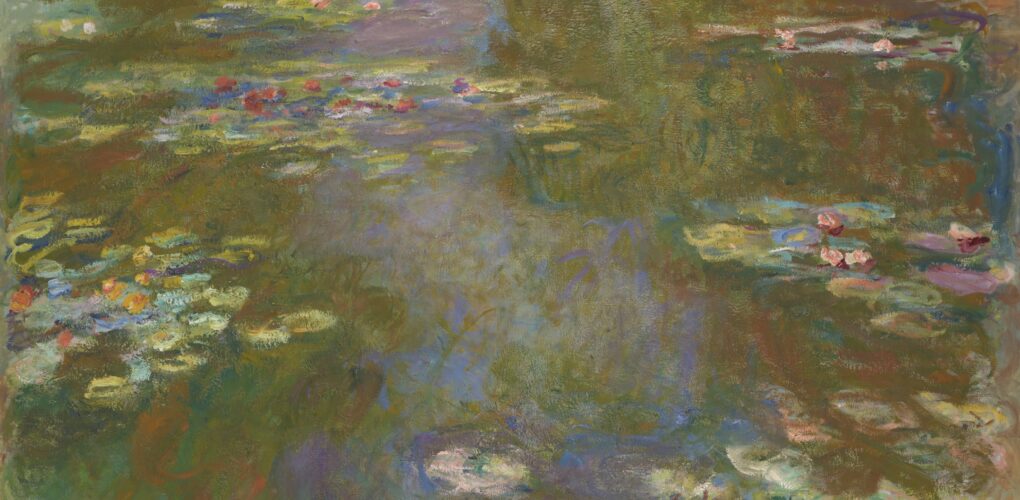
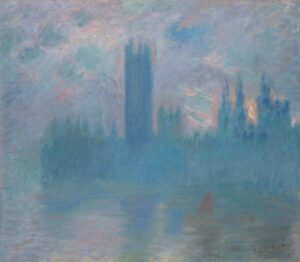
By far the most recognizable and famous of Monet’s works are his paintings of Water Lilies. Often characterized by a fuzzily atmospheric quality, these works are quintessentially Impressionist. These tightly framed works swim before our eyes, as swathes of color meld together. Monet’s light, loose brushwork captures a sense of weightlessness on the water’s surface. Because of his imprecise, carefree style, these paintings often take on an abstract quality, melting away into splotches of color when viewed through squinted eyes. While Monet is well known for a number of iconic subjects, from train stations to views of Parliament, his Water Lilies are his most famous.
How did Monet’s techniques influence contemporary artists working today?
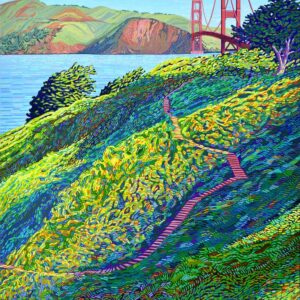
Monet helped pave the way for contemporary art as we know it in several ways. As mentioned, his Water Lilies helped to normalize abstraction, something almost unheard of at that time. His willingness to depict the world with an unnaturally bright palette opened the door for expressionist movements still decades away. His willingness to turn away from traditional subject matter empowered future artists further still. Through his persistence, innovation, and deep sensitivity to the natural world, Monet helped build modern art from the ground up. His work reminds us that beauty often lies not in perfect clarity, but in the shimmering, ever-changing impressions of the world as we truly see it.