One to Watch
 Storytelling with Dimeji Onafuwa
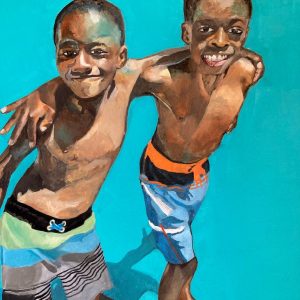
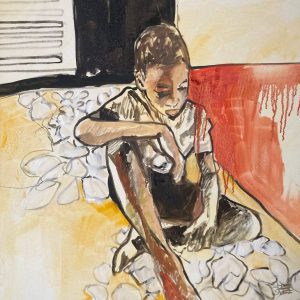
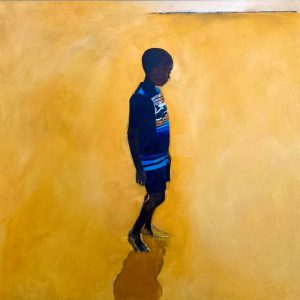
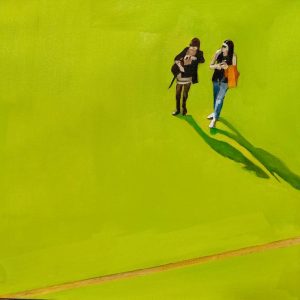
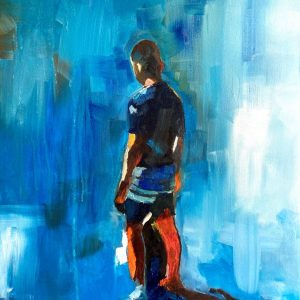
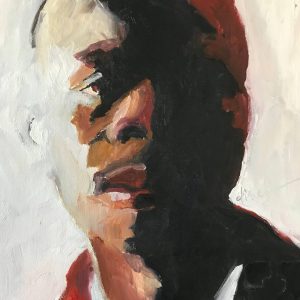
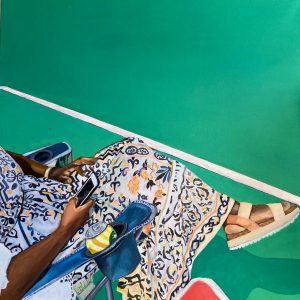
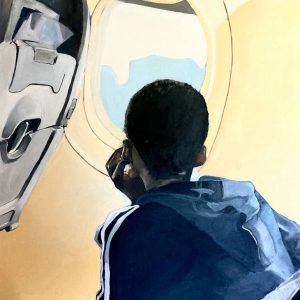
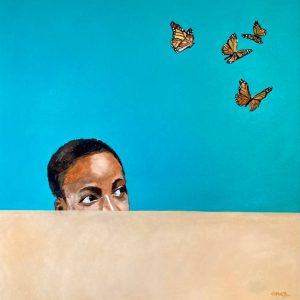
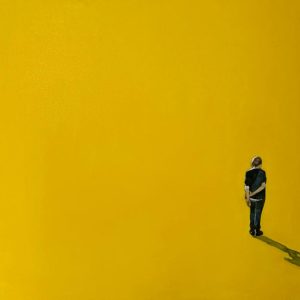
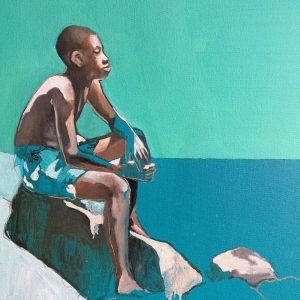
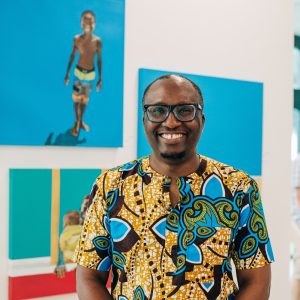
The portraiture of North Carolina-based artist Dimeji Onafuwa pulls figures out of any recognizable setting. Background details are stripped back and replaced with saturated swathes of color, leaving nothing to distract from the person at the center. Stark lighting and the sitter’s often unflinching gaze give each piece great emotional charge. Dimeji received his PhD in design from Carnegie Mellon University, and his work has been featured in a number of exhibitions as well as the Saatchi Art Catalog.
Learn more about Dimeji Onafuwa, a storyteller of human experience and this month’s One to Watch.
Tell us about who you are and what you do. What’s your background?
My name is Dr. Dimeji Onafuwa. My first name, Dimeji, is short for Oladimeji, which means “my royalty” or “my blessings are doubled.” My surname, Onafuwa, can be translated as “within you is the love for art and aesthetics.”
I am an oil painter who works primarily with oil on canvas, though I also occasionally work in pencil, ink, pastel, and watercolor. In addition to my artistic practice, I am a design and research leader with both academic and professional experience in the field of design.
What inspired you to become an artist?
Ever since I was a child, I have had a deep desire and passion to create. I remember making holiday cards and spending all of my pocket money on oil paints. I find joy in observing the world around me and trying to interpret it through my own voice and perspective.
What is your process for turning an idea into a finished painting?
There is a brooding period where I reflect on what story I intend to tell. Then there is a period of putting that story on canvas with charcoal. This is when the sketch starts to emerge with more clarity. Sometimes I use photographic references here, other times I draw from memory. Then I start working in oil, beginning with a wash and then a deliberate and methodical layering of paint on canvas.
Who are your biggest influences and why?
I am inspired by the bold figurative traditions of the 1960s Bay Area painters, including Richard Diebenkorn and Nathan Oliveira, as well as African and African American artists such as my high school art teacher Agboola Oshinowo and her husband Kolade Oshinowo, Amy Sherald, Wole Lagunju, Kerry James Marshall, Sanya Ojikutu, and Noah Oshinaike.
I am also influenced by artists like Mark Rothko, Fernando Porras, my college professor Gerald Arrington, and Henri Matisse, among many others. Their work resonates with my own interest in figurative art, identity, and layered storytelling. I use art to connect with my thoughts and to commune with both contemporary and historical artists.
Are there particular themes or ideas you’re drawn to in your work?
I have woven Yoruba principles of art into my practice. These include àrá (creativity), onú ijú (inner eye or discernment), ojú ọ̀nà (design consciousness), yíyẹ (appropriateness), pípé (completeness), tutù (coolness), and eré (improvisation).
How do you hope viewers respond to your works? What do you want them to feel?
My paintings explore identity, memory, belonging, and the quiet emotional experiences that connect us across cultures and histories. As a Nigerian-born artist living and working in the U.S., I create figures and scenes that reflect both dissonance and connection, solitude and community.
Drawing from Yoruba aesthetics, African and African American artistic traditions, and Bay Area figurative painting, I use color, form, and atmosphere to create spaces that feel both personal and universal. I want viewers to slow down, feel the humanity in the work, and reflect on the visible and invisible histories that shape who we are becoming.
How do you see your work evolving in the next few years?
I hope that, through the years, I continue to evolve my relationship with the figure by simplifying my palette even further and trying out new and different approaches to representing the figure on the canvas. I look forward to working on extremely large pieces over time and introducing more gestural representation in my work.
If your art could be displayed anywhere in the world, where would it be?
I was recently accepted into a cohort of artists whose work will be displayed on billboards in Charlotte, NC, Times Square in New York, and select locations across Europe. It feels like an incredible honor because I’ve always wanted my work to be accessible to everyone, and there may be no greater public stage for that than Times Square—especially during the World Cup and the excitement surrounding the New York Knicks’ historic NBA Championship win.
Looking ahead, my goals are to exhibit at Art Basel and to eventually have my work included in the permanent collection of a major museum, such as the Metropolitan Museum of Art.
What’s the most memorable comment you’ve received about your work?
More of a reminder by the late Thomas James “TJ” Reddy to keep my art practice than just a comment: “Sometimes your work will receive a great deal of attention, and other times very little. But through it all, you must continue to create. Attention and admiration will come and go, but the one thing that can never be taken away is the work itself.”
Meet more artists like Dimeji. Discover a new talent or hear from your favorites in our monthly One to Watch interview.